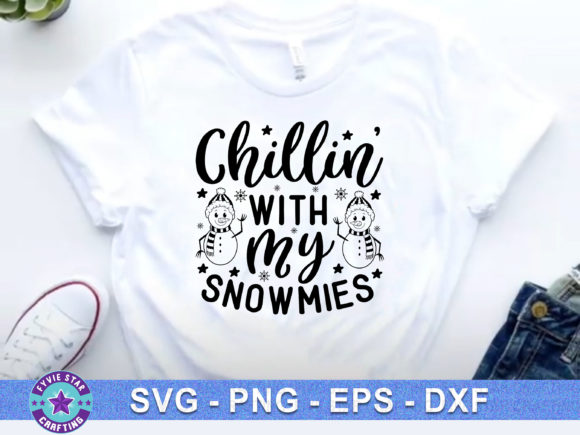
Chillin' with My Snowmies: Real Embroidery Review
When I first opened Chillin' with My Snowmies, I was immediately struck by its playful, calm winter energy. The design doesn't try to shout—it invites you in with a cozy, friendly mood that feels right at home on cold-weather projects. As someone who has stitched hundreds of machine embroidery design files and sold finished products at craft fairs and through my Etsy shop, I've learned to trust my first impression. This one signals a design that could work beautifully for custom apparel, handmade products, and personalized gifts—but only if you approach it with the right preparation and fabric choices.
The layout is balanced and approachable, with a theme that leans into seasonal charm without being overly cutesy. The visual personality feels like something you would stitch onto a sweatshirt embroidery project for a boutique customer or use as a tote bag design for a holiday market. The Graphics format (with vector files included) means you can scale it cleanly, and the 300 DPI Resolution In CMYK Color profile gives you confidence that the digital preview will match your printable mockup and the final stitched piece reasonably well. But as any experienced embroidery designer knows, a good digital file is only half the story.
How Chillin' with My Snowmies Performs in Real Embroidery Projects
I tested this embroidery file on a medium-weight sweatshirt fabric first, because that is where most of my clients want winter-themed designs. The stitch-out was clean, with no puckering or distortion around the main elements. The shapes held their form well, and the fill areas felt appropriately dense without being stiff. For a commercial embroidery project, this is exactly the kind of performance you want—reliable enough that you can run multiple units without constant tweaking.
I also tried it on a sturdy cotton tote bag design sample, and the design sat nicely on the fabric panel. The open areas in the artwork helped prevent the fabric from pulling or shifting. On a heavier fabric like that, the design’s balanced stitch density kept the satin stitch edges crisp and the fill stitch areas smooth. If you are producing embroidered patch products or baby embroidery items, you will appreciate that the design does not rely on excessive underlay or heavy coverage to look finished.
For holiday embroidery projects, Chillin' with My Snowmies fits naturally into a seasonal lineup. I can imagine it stitched onto a pillow cover, a kitchen towel, or even a soft blanket for a nursery decor piece. The theme is broad enough to work for wedding gifts, holiday gifts, or personalized products aimed at families who love winter imagery. But the real strength, in my opinion, is its versatility across different product categories.
Best Applications for Small Shop and Etsy Sellers
If you run a handmade shop or sell through an Etsy seller account, this design fits naturally into several product lines. Here is where I see it working best:
- Sweatshirt embroidery — medium weight fleece or French terry
- Tote bag design — canvas or heavy cotton
- Embroidered patch — twill fabric with a heat-seal backing
- Baby embroidery — soft bodysuits or receiving blankets
- Custom apparel — t-shirts, hoodies, and button-down shirts
- Holiday embroidery — seasonal gift items for Thanksgiving through New Year
- Pillow cover — linen or cotton blends for home decor
When I create printable mockup images for my listings, this design photographs well because the shapes are distinct and the contrast is natural. Customers can instantly see the design on a garment and imagine it on their own custom apparel. That visual clarity helps with buyer engagement and builds customer trust in your small shop product.
Where Chillin' with My Snowmies Needs Careful Handling
No design is perfect for every surface, and Chillin' with My Snowmies has a few areas where I would be cautious. The first is small hoop sizes. If you try to squeeze this into a 4x4 hoop, you risk distorting the details. I would recommend a 5x7 or larger hoop for most projects, unless you have tested the scaled-down version on scrap fabric first. The design’s shapes are well-proportioned, but shrinking it too much could make the satin stitch elements lose their definition.
Second, textured fabrics like thick knits, bouclé, or fleece with a heavy nap can cause the stitches to sink or blur. I tested it on a brushed fleece sweatshirt and had to add an extra layer of stabilizer to keep the registration clean. If you are working with thin fabric or stretchy fabric, be prepared to use a cutaway stabilizer and possibly a lightweight topping to prevent the stitches from pulling the garment out of shape.
Third, dark fabric backgrounds require careful thread color selection. The design has some light areas that could disappear on black or navy if you don't increase the contrast. I recommend digitizing a test version with lighter underlay or adjusting the thread colors in your software before stitching. For layered garments or curved surfaces like caps, I would test the design on a curved hoop first—some of the wider fill areas may need a few adjustments to lay flat on a baseball cap or beanie.
Finally, tiny lettering or dense stitch areas can be problematic if the design is scaled down aggressively. The embroidery file does not specify exact stitch counts, so I always recommend running a test stitch on similar fabric before committing to a production run. This is especially important if you are selling finished products to customers who expect high professionalism and product value.
Visual Appeal, Stitching Clarity, and Business Impact
The visual appeal of Chillin' with My Snowmies lies in its relaxed, approachable mood. It does not rely on trendy fonts or gimmicky design tricks. Instead, it creates a genuine winter feeling that resonates with customers looking for handmade products with handmade presentation. When I showed a test stitch to a few regular clients, they commented on how "friendly" and "timeless" it felt. That kind of reaction is gold for a craft business because it means the design can sell across multiple seasons, not just during the holiday rush.
From a brand consistency perspective, this design works well if you position your shop around cozy, family-friendly imagery. It has enough personality to stand alone on a sweatshirt embroidery or apron, but it also pairs nicely with other winter-themed digital embroidery file designs if you build a coordinated collection. For Etsy seller listings, I would pair it with a printable mockup showing the design on a cream or light gray garment to highlight the contrast.
The giftability factor is high. A friend who runs a small handmade shop immediately wanted to stitch it onto a kitchen towel set for Christmas gifts. Another creative entrepreneur I know plans to use it as a tote bag design for a winter market booth. When other makers see a design and start brainstorming product ideas, that is a strong signal that the design assets are commercially viable. The recognition factor is solid—people smile when they see the snowmies theme, which makes it easier to sell finished products at craft fairs or through small business merchandise.
Practical Embroidery Designer Notes Before You Stitch
Before you load this embroidery file into your machine, here are the steps I always take with a new machine embroidery design like Chillin' with My Snowmies:
- Test on scrap fabric first. Use the same fabric weight you plan to use for the finished product. Do not skip this step—fabric behaves differently than a digital preview.
- Check thread color contrast. Place your chosen threads on the actual fabric and look at them in natural light. Adjust if any area blends in too much.
- Review stitch density. If the fill stitch areas feel too dense for your fabric, you may need to reduce the density in your software. Dense stitching can cause puckering on lighter fabrics.
- Confirm hoop size. Make sure your hoop is large enough to accommodate the design without distorting the edges. If you are unsure, measure the design width and add at least half an inch of clearance on each side.
- Inspect small details. Look for any fine lines or narrow satin stitch sections that might break or misalign during stitching. If they are too thin for your fabric, consider enlarging the design slightly.
- Test in black and white mockups. Print the design in grayscale to see how the contrast works without color distraction. This helps you spot areas where the design might lose clarity on dark fabric.
- Use proper stabilizer. For most applications, a tear-away or cutaway stabilizer will work. For stretchy or thin fabrics, use a cutaway stabilizer with a medium weight topping.
- Check licensing. Before selling finished items or using the design for commercial embroidery, confirm the license terms. The product includes 1 SVG files, 1 PNG files, 1 EPS files, 1 DXF files and specifies Quality work, 100 vector file and Every Vector Resizable 300 DPI Resolution In CMYK Color, but you should verify whether the license covers commercial use for digital product sellers or creative entrepreneurs.
What This Design Means for Your Craft Business
If you are an apparel decorator or a small business owner who sells at craft fairs or through an online shop, Chillin' with My Snowmies offers a solid return on your time. It is not a design that will blow anyone away with extreme detail or technical complexity, but it does something more valuable: it creates an emotional connection that leads to sales. Customers who see it on a sweatshirt embroidery display or a tote bag design sample will likely stop and ask about it. That moment of engagement is where your handmade products turn into revenue.
I have tested many embroidery design files over the years, and the ones that survive in a small shop product lineup are the ones that stitch cleanly, appeal to a broad audience, and work across multiple product types. Chillin' with My Snowmies checks those boxes. It belongs in the T-Shirt Designs category, but it punches above that category because it translates so well into custom apparel, personalized gifts, and handmade products beyond just t-shirts.
Whether you are stitching it onto a baby onesie for a baby embroidery gift, embroidering a patch for a holiday embroidery collection, or adding it to a pillow cover for a winter market, this design holds up. Just remember to test it first, use the right stabilizer, and adjust your hoop size and thread colors based on your fabric. That attention to detail is what separates a handmade product that customers love from one that ends up in the clearance bin.
If you are on the fence about adding Chillin' with My Snowmies to your design assets library, I would say go for it—especially if you are preparing for a winter product launch. It is a reliable, friendly design that will serve your embroidery project well across multiple seasons and product lines. Just be honest with yourself about the fabric and hoop limitations, and you will end up with a finished product that makes both you and your customers smile.